Discover Senegal
Land of Teranga at Africa's westernmost tip: geography, climate, population and institutions of the Republic of Senegal.
Land of Teranga — hospitality in Wolof — Senegal is one of Africa's most stable democracies. Facing the Atlantic Ocean at the westernmost tip of the continent, it combines a rich history, a vibrant culture and a fast-growing economy.
Senegal at a glance
Official name
Republic of Senegal
Capital
Dakar
National motto
One People – One Goal – One Faith
Official language
French
Currency
CFA franc (XOF)
Location
West Africa
Geography
At the westernmost tip of the African continent, opening onto 700 kilometres of Atlantic coastline.
Located at the westernmost tip of the African continent, Senegal covers about 196,722 km². It is bordered to the north by Mauritania, to the east by Mali, to the south by Guinea and Guinea-Bissau, and surrounds The Gambia, enclosed along the river of the same name.
With more than 700 kilometres of coastline on the Atlantic Ocean, the country holds a strategic position: the Cap-Vert peninsula, home to Dakar, is the westernmost point of mainland Africa. Its deep-water port and Blaise Diagne International Airport make Senegal a natural gateway to West Africa.
Relief
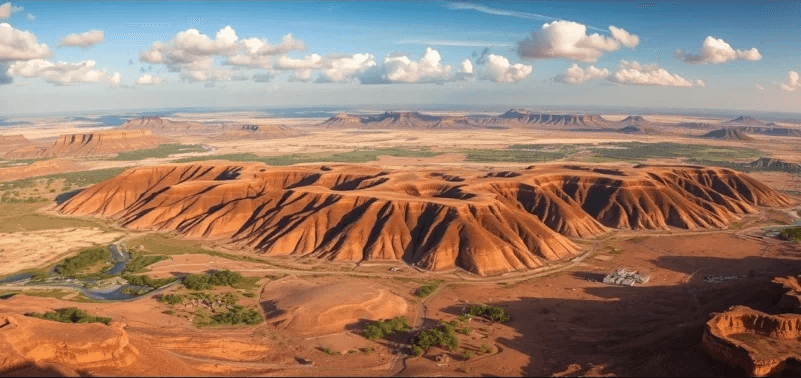
A land of plains and plateaus, between the Ferlo savannas, the Senegal River valley and the forests of Casamance.
Senegal's territory is generally flat: most of the country lies below 130 metres in altitude. The sandy plains of the groundnut basin, the Ferlo silvopastoral zone and the market-gardening strip of the Niayes, along the northern coast, form gentle, open landscapes.
The land rises significantly only in the south-east, on the foothills of the Fouta-Djallon massif, where the country's highest point is reached (about 581 metres, near Népen Diakha). Casamance, in the south, offers lush landscapes of forests, rice fields and mangroves.
- Sandy plains of the groundnut basin
- Savannas and the Ferlo agro-pastoral zone
- Foothills of the Fouta Djallon: 581 m at the highest point
- Senegal River valley, Saloum delta and mangroves
- Lush forests and rice paddies of Casamance
- Market-garden Niayes along the northern coast
Climate
A tropical climate with two seasons, tempered along the coast by Atlantic trade winds.
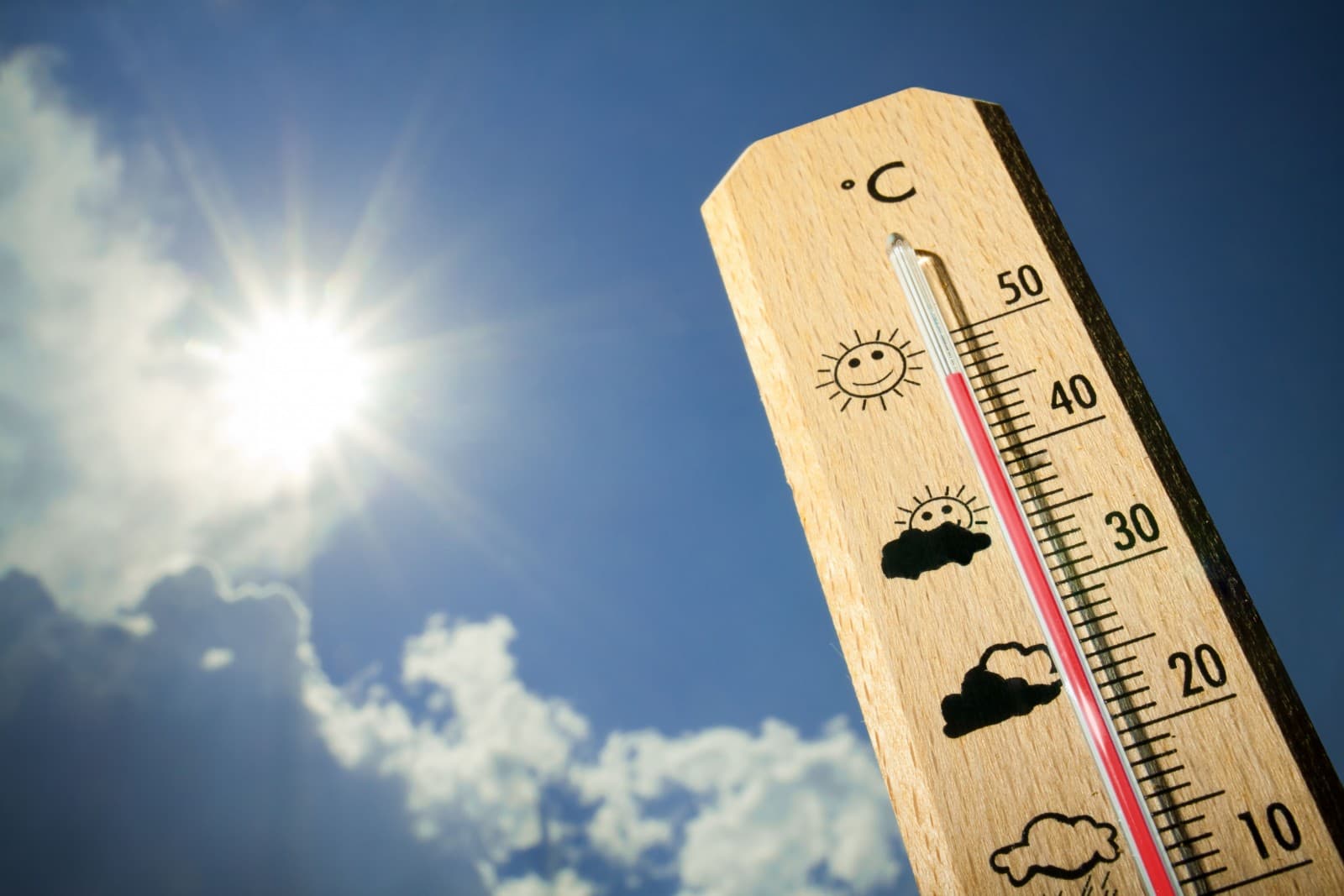
Senegal enjoys a tropical climate marked by two seasons: a dry season from November to May, driven by the maritime trade winds and the harmattan, and a rainy season — the “hivernage” — from June to October.
Average temperatures range from 24 to 30 °C on the coast, cooled year-round by the Atlantic Ocean, and are higher inland. This generous sunshine, more than 3,000 hours a year, makes Senegal a pleasant destination in every season.
- Dry season from November to May, over 3,000 hours of sun a year
- Rainy season (hivernage) from June to October
- 24 to 30 °C on the coast, up to 40 °C inland
- Maritime trade winds and the harmattan from the Sahara
Population
A young and plural nation, united by Teranga and an exemplary interfaith dialogue.
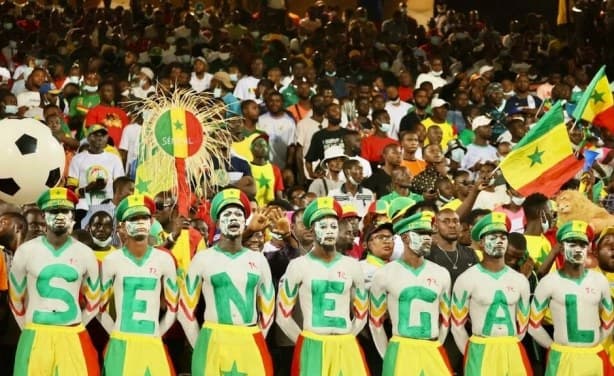
Senegal has around 18 million inhabitants, nearly a quarter of whom live in the Dakar metropolitan area. The population is remarkably young: more than half of Senegalese are under 25.
The country is a mosaic of cultures: Wolof, Pulaar, Serer, Diola, Mandinka and Soninke, among others, live together in harmony. Islam, practised by the vast majority, coexists with a vibrant Christian community in a widely recognised spirit of tolerance. This social cohesion, embodied by Teranga and interreligious dialogue, is one of the nation's great sources of pride.
- French as official language, Wolof as lingua franca
- Wolof, Pulaar, Serer, Jola, Mandinka and Soninke communities
- Teranga and interfaith dialogue at the heart of living together
- Nearly a quarter of the population in the Dakar metropolitan area
18,847,519
Inhabitants
A young, fast-growing population, nearly a quarter of whom live in the Dakar metropolitan area.
Over %Over 50%
Under 25 years old
Youth is the country's main demographic and economic asset.
over%over95%
Muslims
In Senegal, Muslims make up more than 95% of the total population. Islam is thus the overwhelming majority religion in the country.
+20+
National languages
French is the official language; Wolof, Pulaar and Serer are the most widely spoken.
km²196,722 km²
Area
A territory at the westernmost tip of Africa, between the Sahel and the forests of Casamance.
km700 km
Atlantic coastline
From the beaches of the Grande Côte to Cap Skirring, a strategic maritime frontage.
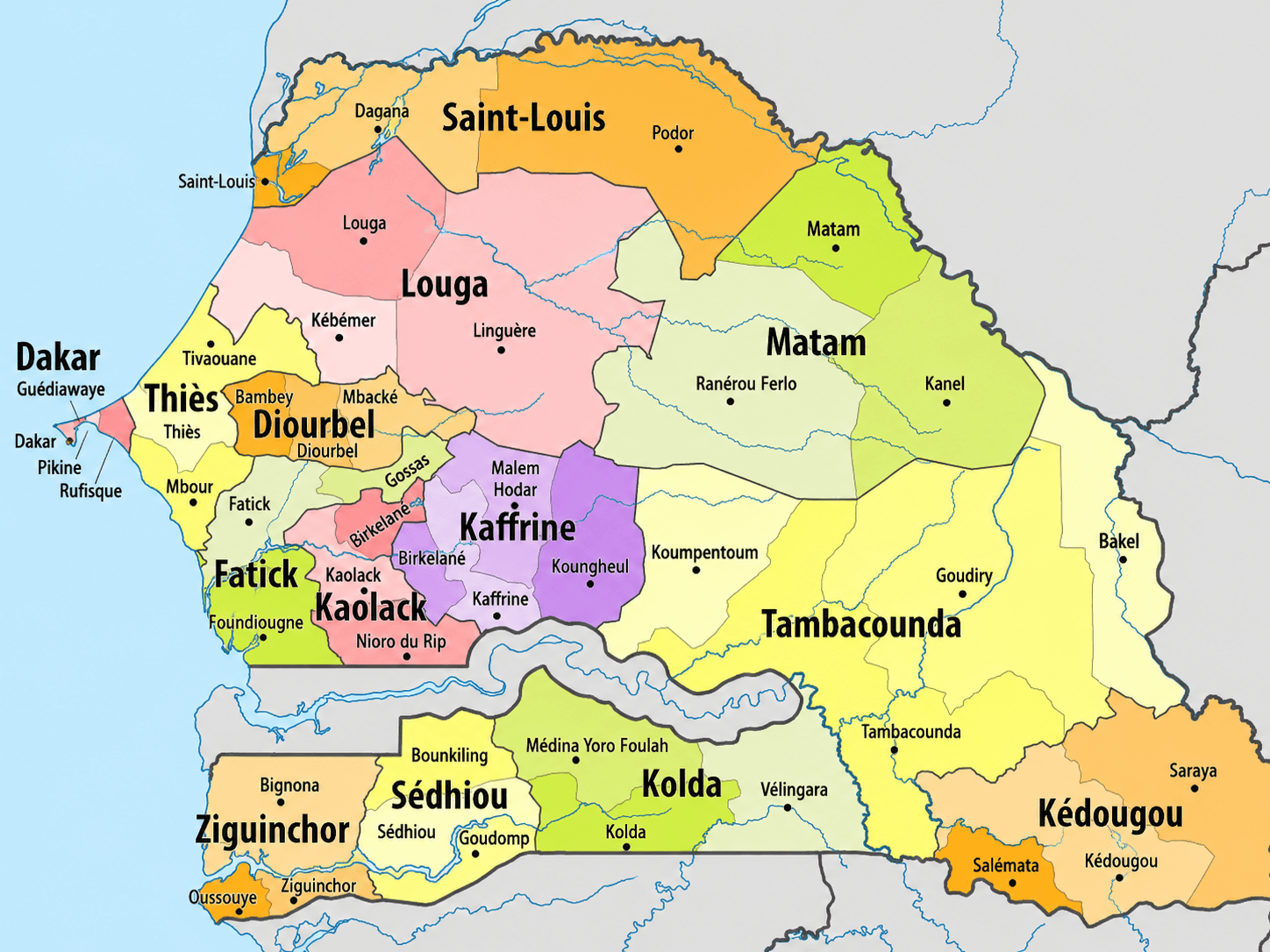
14
Administrative regions
Subdivided into 46 departments and over 600 communes serving local development.
Political and administrative organisation
A presidential Republic founded on the separation of powers and active decentralization.
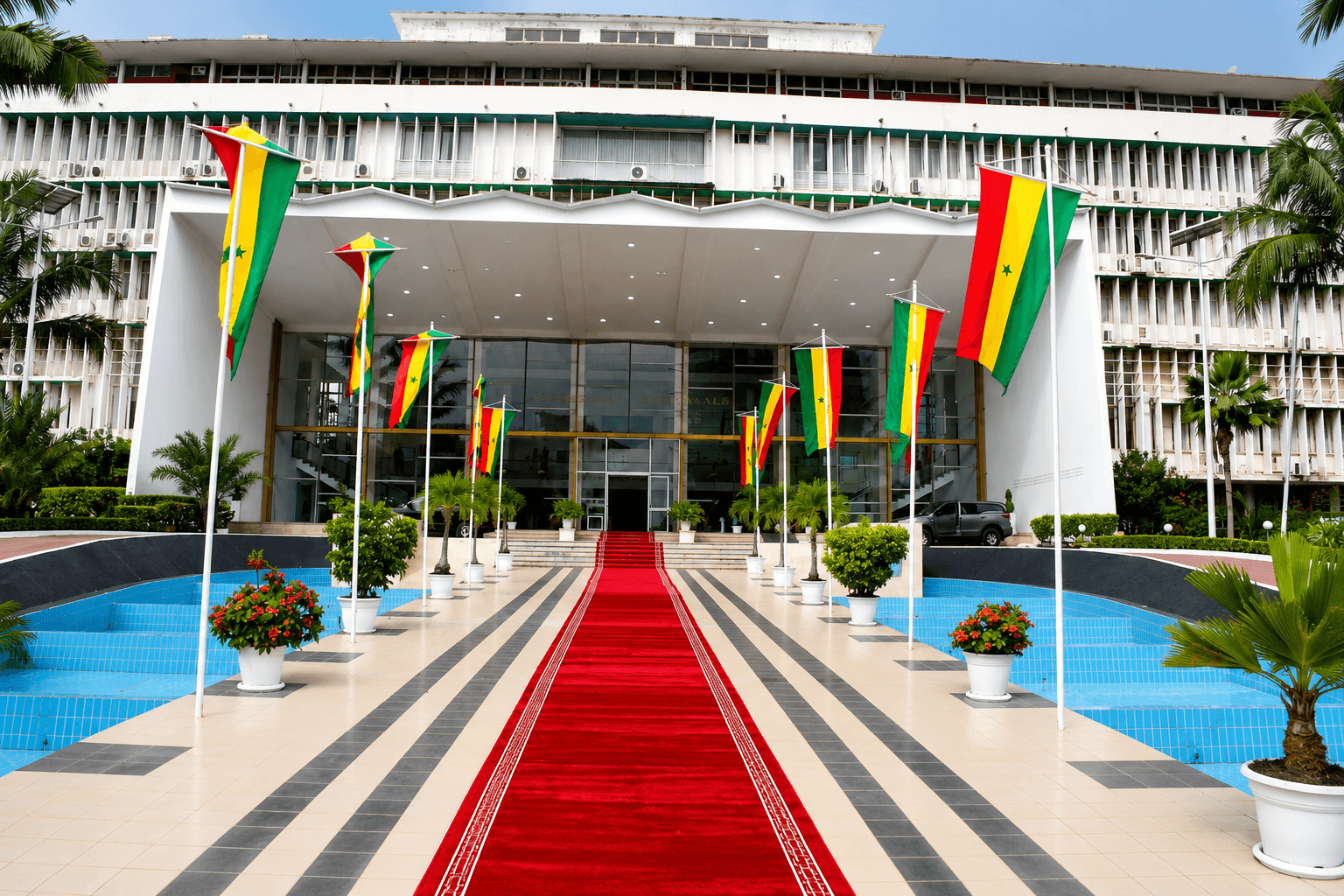
The Republic of Senegal is a presidential system based on the separation of powers. The President of the Republic, Head of State, is elected by direct universal suffrage for a five-year term. He appoints the Prime Minister, who leads the Government's action, while the National Assembly, made up of 165 members, exercises legislative power, and an independent judiciary guarantees the rule of law.
Territorially, the country is organised into 14 regions, subdivided into 46 departments and more than 600 municipalities. The decentralisation policy grants local authorities broad powers to serve local development.
President of the Republic
Head of State, elected by direct universal suffrage for a five-year term. He embodies national unity and ensures respect for the Constitution.
Government
Conducts the policy of the Nation under the authority of the Prime Minister, appointed by the President of the Republic.
National Assembly
Made up of 165 members elected for five years, it passes legislation and oversees the Government's action.
Judiciary
Independent, it upholds the rule of law through the Constitutional Council, the Supreme Court and the Court of Auditors.
14 regions
The top tier of territorial organization, each region is administered by a governor and has a departmental council.
46 departments and 600+ communes
Decentralization grants local authorities broad responsibilities in the service of local development.